ATOM Research
Build a machine that learns like we do.
ATOM is a select group of researchers pursuing one question: how can an agent come to understand a naturalistic world with as few resources as possible, in energy, compute, interaction and time?
Ambition
The most capable learning agents.
Open-ended
Autonomous, continual and open-ended learning.
Efficient
Sample- and compute-efficient learning.
Adaptive
Generalization and adaptation under domain shift.
Aligned
Alignment, safety and robustness.
Thesis
Learning in nature follows general principles.
We believe that building on those principles is the route to the best kind of learners. Theories from developmental psychology, cognitive science, neuroscience and physics start from different places and arrive at similar principles. Our approach synthesizes this convergence and uses the state of the art in machine learning to instantiate it at scale.
Humans are the best learners we know, so “learn like we do” is the clearest way to say it. We aim to replicate the principles of human learning, not its flaws.
Why it matters
Today's AI mostly learns by passively absorbing vast amounts of data.
A toddler putting a new object in their mouth is running an experiment: testing what it is made of and how it behaves, and revising their model of it.
Building on how learning works in nature can give us AI that learns autonomously, continually and open-endedly from far less data and compute, generalizes and adapts when the world changes, and is aligned, safer and more robust.
Featured publicationNeurIPS 2026
Pinductor
Learning POMDP World Models from Observations with Language-Model Priors
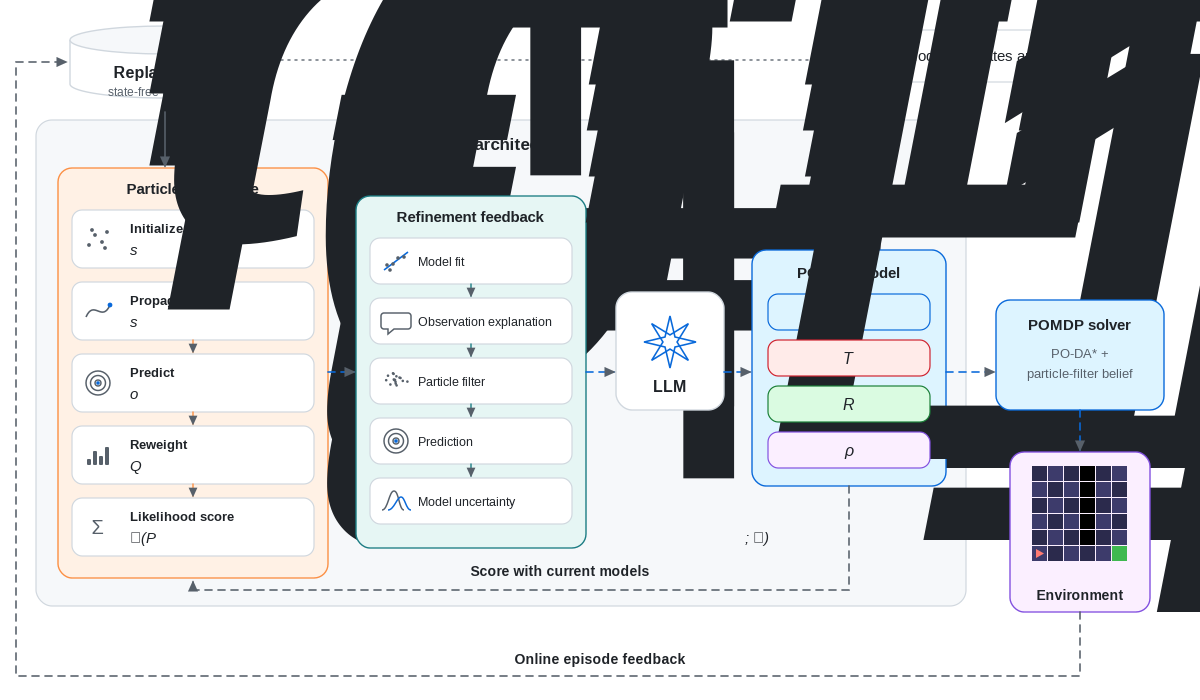
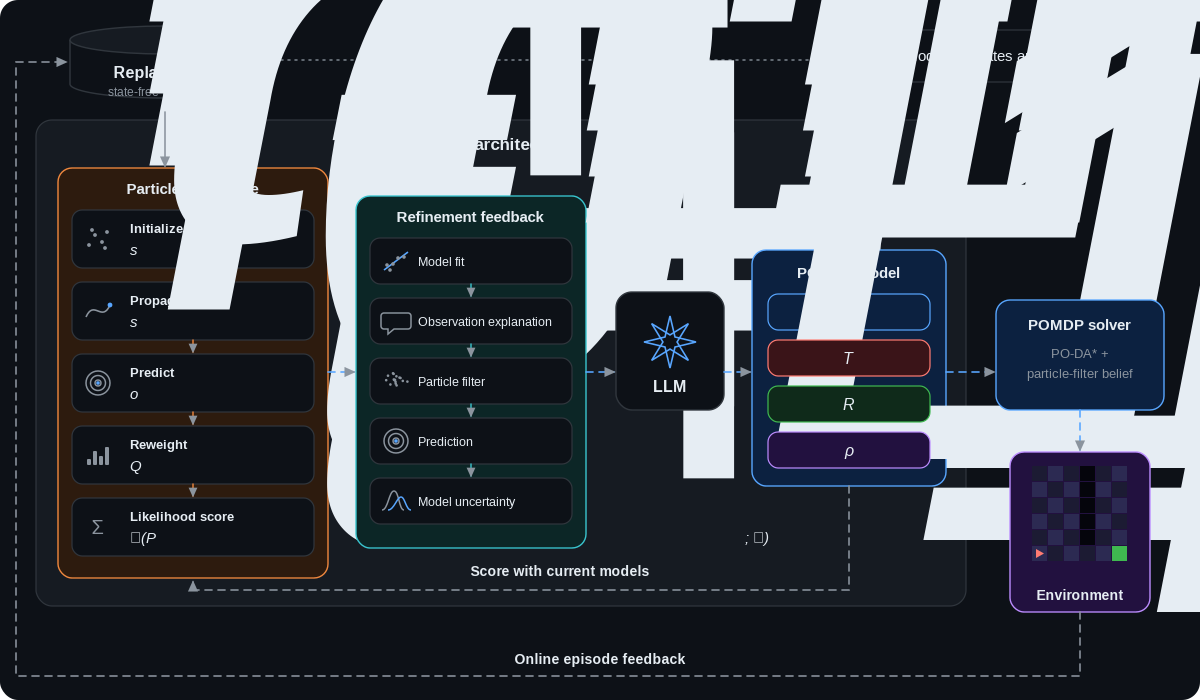
Pinductor (POMDP-inductor) induces executable world models from just a handful of observation-action trajectories. An LLM proposes the POMDP components as code, and a particle filter scores each candidate against the observations alone, with zero access to hidden states.
Valentin Six, Frederik Panse, Mathis Fajeau, Lancelot Da Costa, Mridul Sharma, Alfonso Amayuelas, Tim Z. Xiao, David Hyland, Philipp Hennig, Bernhard Schölkopf